Artificial Intelligence (AI) has transitioned from the realm of science fiction into an integral part of our daily lives. From smart assistants like Siri and Alexa to self-driving cars, AI technologies are increasingly shaping how humans live, work, and interact. While some hail AI as a revolutionary boon with limitless potential, others caution that its unchecked growth could be a bane, especially for future generations. The debate is not merely academic; it has profound implications for education, employment, ethics, and societal well-being.
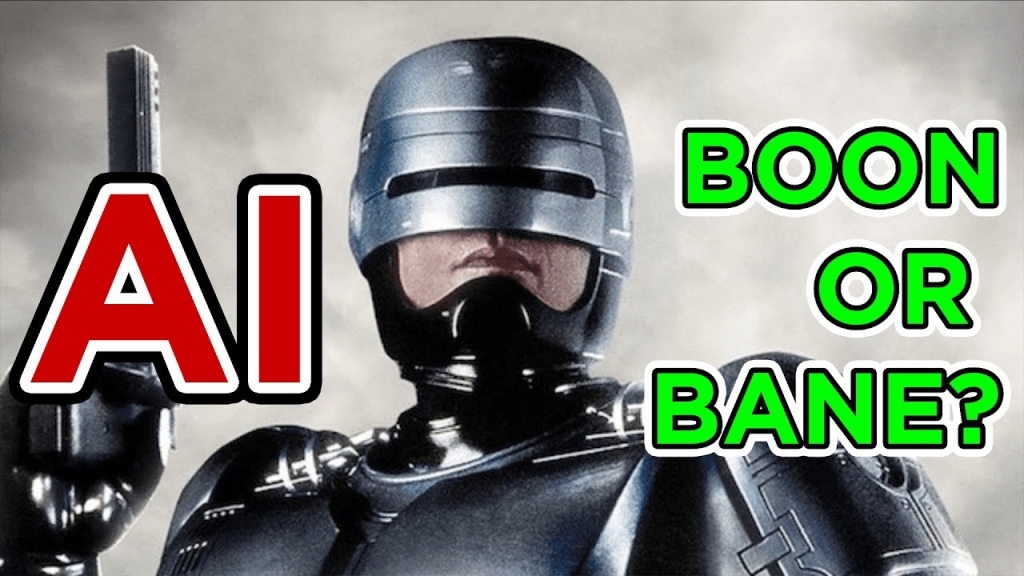
The Boon: Transforming Lives and Opportunities
1. Revolutionizing Healthcare
One of the most promising areas where AI serves as a boon is healthcare. AI algorithms can analyze massive datasets faster than humans, helping doctors detect diseases like cancer, diabetes, and neurological disorders at an early stage. Personalized treatment plans, powered by AI, improve patient outcomes and reduce healthcare costs. For future generations, this could mean longer, healthier lives with fewer preventable diseases.
2. Enhancing Education
AI is transforming education by making it more personalized and accessible. Adaptive learning platforms can identify a student’s strengths and weaknesses, offering customized resources that suit their learning pace. AI-driven tools can also provide virtual tutors for students in remote areas where quality education is scarce. This ensures that future generations have equal opportunities to learn, grow, and succeed.
3. Boosting Efficiency and Productivity
In industries ranging from agriculture to finance, AI enhances efficiency by automating routine tasks, predicting trends, and reducing human error. For instance, AI-powered drones can monitor crops and optimize irrigation, while financial algorithms can detect fraudulent transactions in real time. This allows humans to focus on creativity, strategic thinking, and innovation—skills that will be crucial for future generations.
4. Advancing Scientific Research
AI accelerates scientific discoveries in ways previously unimaginable. Complex problems, such as climate modeling or drug discovery, can now be solved faster using machine learning and predictive analytics. Future generations could benefit from faster solutions to global challenges like climate change, energy shortages, and pandemics. AI, in this sense, becomes a powerful ally in building a sustainable and prosperous future.
The Bane: Challenges and Risks
1. Threat to Employment
While AI creates new job opportunities, it also displaces millions of traditional jobs, especially in sectors like manufacturing, transportation, and customer service. Automation may leave future generations grappling with unemployment or underemployment if the workforce is not reskilled adequately. The economic divide could widen, leading to social unrest and inequality.
2. Ethical Dilemmas
AI technologies raise profound ethical questions. For instance, autonomous weapons could make life-and-death decisions without human intervention. AI algorithms used in recruitment or law enforcement may inadvertently reinforce biases present in historical data. Future generations might inherit a world where critical decisions are influenced—or even dominated—by opaque algorithms, raising concerns about fairness, accountability, and human rights.
3. Privacy Concerns
AI’s power lies in its ability to analyze vast amounts of data, but this comes at the cost of personal privacy. From social media activity to health records, AI systems collect, store, and interpret sensitive information. Misuse or breaches of this data could expose future generations to identity theft, surveillance, or even manipulation of opinions and behaviors.
4. Dependency and Loss of Human Skills
Over-reliance on AI could diminish essential human skills such as critical thinking, problem-solving, and creativity. If future generations depend heavily on AI for decision-making, they may struggle to make independent judgments or develop cognitive resilience. This could have long-term societal consequences, including reduced innovation and weakened human agency.
Striking a Balance: The Way Forward
The question is not whether AI is inherently good or bad, but how we harness its potential while mitigating risks. Future generations will inherit the benefits or consequences of today’s decisions regarding AI development and regulation. Here are some approaches to ensure AI becomes more of a boon than a bane:
1. Ethical AI Development
Governments, tech companies, and researchers must prioritize ethical AI. Transparency, accountability, and inclusivity should guide AI algorithms. Ethical frameworks can ensure that AI supports human welfare rather than undermining it.
2. Education and Skill Development
Reskilling and upskilling are crucial. Preparing future generations for AI-driven economies involves teaching technical skills, such as coding and data analysis, alongside soft skills like creativity, empathy, and problem-solving. A well-rounded education will empower individuals to leverage AI rather than be displaced by it.
3. Regulatory Oversight
AI needs careful regulation to prevent misuse and protect privacy. Governments must enact laws that govern data collection, algorithmic transparency, and AI applications in critical areas like healthcare, law enforcement, and finance. This ensures AI serves the public interest rather than corporate or political agendas.
4. Promoting Human-AI Collaboration
AI should complement human intelligence, not replace it. By fostering collaboration between humans and machines, we can achieve breakthroughs in productivity, creativity, and innovation. Future generations will benefit from this synergy, gaining access to tools that amplify their abilities rather than limit them.

5. Global Cooperation
AI is a global phenomenon that transcends national borders. Collaboration between nations, organizations, and researchers is essential to address shared challenges, from cybersecurity to climate change. Future generations can enjoy the fruits of AI when it is developed responsibly and equitably across the globe.
Conclusion
AI is neither an unqualified boon nor an inevitable bane; it is a tool whose impact depends on how we wield it. For future generations, AI offers unparalleled opportunities in healthcare, education, research, and productivity. Yet, it also brings challenges such as job displacement, ethical dilemmas, privacy concerns, and the risk of over-dependence.
The future hinges on a conscious, collective effort to develop, regulate, and use AI responsibly. If society prioritizes ethics, education, and human-AI collaboration, the coming generations could inherit a world where AI is a powerful ally—enhancing lives, expanding possibilities, and solving some of humanity’s greatest challenges. Conversely, neglecting these responsibilities could turn AI into a disruptive force that threatens jobs, privacy, and equality.
Ultimately, whether AI becomes a boon or a bane for future generations depends not on technology itself, but on humanity’s wisdom, foresight, and values.
#AI #artficialintelligence #boonorbane #futuregeneration
 Nature's incredibility